Gareth Pugh’s New Make Up Range for M•A•C

After two years of hard work, Gareth Pugh, the UK’s most unconventional and edgy designer, has teamed up with the international cosmetics brand M•A•C to launch a beautiful new range of chic and unexpectedly beautiful makeup. Pugh has forged a reputation for awe-inspiring, thoroughly unique and beautifully exquisite pieces, and now he brings his unusual approach to this exciting new collection. Drawing directly from his signature gothic, androgynous and futuristic style, the range includes nail varnishes, graphic false lashes, lipsticks, creamy eyeshadows, beauty powders and a make-up bag. The collection is made of two parts: in an interview with Vogue.com the designer explains: “it’s like the positive and negative elements of a battery. They are total opposites but when combined together they create energy”. He adds therefore that the two opposites are contrasting: “One light and ethereal, based on silver and grey tones and the other is dark blue colours, which has a more powerful message – I really like the idea of exploring the hard side of beauty”.

To celebrate the launch of this highly anticipated new line, which happened on 2 December, an event will take place in the very large venue of Ambika, P3 at the University of Westminster. The date is not yet disclosed to the general public but fans of both M•A•C and Gareth Pugh will be able to enjoy a stylishly subversive evening of bespoke Patron tequila margaritas, gin cocktails and Moscow mules and DJs with sets from Pippa Greenbank, Iwan Halstead, Pippa Brooks, Richard Mortimer and Princess Julia. Guests will also get a glimpse of the Gareth Pugh for M•A•C film, directed by Ruth Hogben.

My favourite product in the range – Gareth Pugh for M•A•C nail lacquer in hyper

Guests confirmed to attend include Gareth Pugh, Mary Charteris, Erin O’Connor, Peaches Geldof, Hannah Marshall, Amy Molyneaux, Percy Parker, Jameela Jamil, Lara Bohinc, Lisa Moorish, Holly Fulton, Bay Garnett, Mark Fast, Louise Gray, Bip Ling, Virginia Bates, Noelle Reno, Fred Butler and Tolula Adeyemi.

Gareth Pugh, who has in the past been compared to the likes of Alexander McQueenJohn Galliano, Vivienne Westwood and Leigh Bowery, is famous for his trademark experimentation with form and volume. Daniel West from Icon Magazine in 2006 said that the designer often uses “nonsensically shaped, wearable sculptures” to “distort […] the human body almost beyond recognition”, and with this new collection Pugh has definitely reinforced his reputation as one of the most avant-garde and creative designers in the UK.

If you are as excited as I am about this wonderful collaboration, you can buy the collection at http://www.maccosmetics.co.uk/whats_new/7766/index.tmpl.

Glossing Over Retail

Fashion magazines in the US have started selling the clothes they review. At the same time, just as you are now able to purchase the latest Derek Lam and Marc Jacobs pieces from the website of Vogue magazine, the opposite is also happening. Nowadays, every respectable online and brick-and-mortar fashion retailer worth a fashionista’s glance, has a magazine. From high-street to high-end fashion, ASOS, my-wardrobe.com, H&M, all have an online or printed magazine.

ASOS Magazine

As the US Vogue site mentions, “Vogue may receive a commission on some sales made through this service”, which clearly shows that magazines are getting into retail, and they mean business. Meanwhile, ASOS magazine showcases articles about the latest cool personalities and musicians while cleverly squeezing among those pages several features tailored on the season or current trends, listing their own products. This is the latest trend for catalogues that seem less invasive or pushy and, in turn, are more effective in selling the stock. If before you needed to walk into the shop to be sold a skirt that could be paired with the sales assistant’s suggestion of a certain top and shoes at, for example, your next Christmas party, now you need only to flick through the pages of ASOS’s glossy to see features about what to wear for such an occasion from head to toe, nails included.

Moda Operandi website, with links to trunk shows.

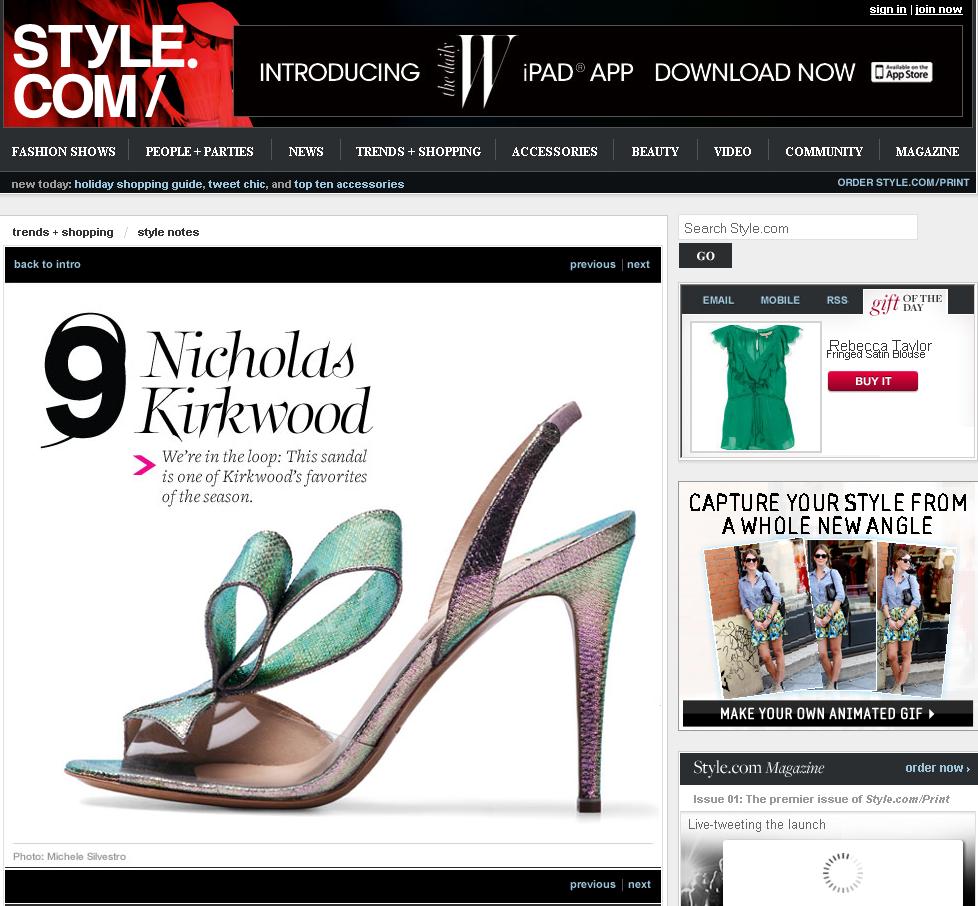
Magazines used to help designers sell, at times even guaranteeing coverage to those who buy advertising spaces in their pages, but now they are starting to represent competition to traditional retailers and high-end department stores such as Selfridges and Harvey Nichols. There are no more boundaries between these two industries. Vogue recently teamed up with the new online luxury catwalk looks retailer Moda Operandi to get closer to the consumers and Style.com has also started selling clothes.

Style.com website with a link on the top right to purchase a Rebecca Taylor top.

A technique widely used by both gloss magazines and online retailers is the Editor’s recommendation. Websites such as my-wardrobe.com and Net-a-Porter.com often feature Editor’s Pick pages, which lure the consumers into feeling “if a fashion Editor has picked this product, it must be good”.

Designers' picks and links to their collections on Net-a-porter.com.

Indeed, these two business trend changes are related by the fact that retailers started producing catalogues that look more like glossies than mere marketing products paired with the fact that magazines have been experiencing advertising losses for years now, due to the threat constituted by online competition and recession. The readers and consumers have changed their expectations too, in the last few years. It is so common these days to have links through to whatever object we covet and wish to purchase, that if a magazine or website shows us a great frock, and then does not let us buy it, we get frustrated and are, in turn, unhappy readers/customers.

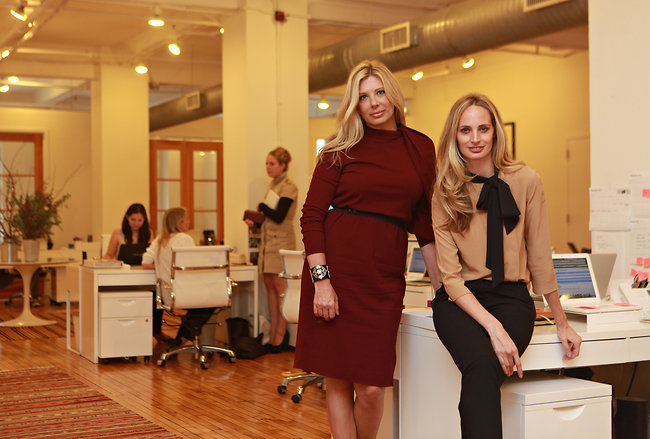
However, Lauren Santo Domingo, a contributing editor at Vogue and Moda Operandi co-starter believes that her site, which provides an online version of a shop’s trunk show, has in fact a positive impact on designers’ sales figures, offering a real service by enabling them to understand, before the clothes are produced, which styles customers are interested in buying. Through the website, designers are also able to sell high-fashion, super-expensive and eccentric pieces which traditional stores would normally steer well away from. Although the site was only created about a year ago, Aslaug Magnusdottir, the other half of Moda Operandi, expected to gain 120,000 subscribers in the last quarter of 2011. More than 40% of their customers went back to the website to purchase more items after their first buy and the average transaction is about US$1,500 (ca. £950).

Aslaug Magnusdottir, left, and Lauren Santo Domingo at their The Madison Avenue office of Moda Operandi. Source: http://www.nytimes.com.

Ms Magnusdottir said that “the consumer becomes the buyer”. That sounds like a good way of putting it, however they are a buyer who is still heavily biased by trends dictated by glossies, be it a catalogue magazine or a traditional publishing one.

The Time I Went to Paris

On 8 October I took a train to Paris. I arrived there just after the capital’s fashion week had ended, which gave me the chance to visit beauties such as the Oh So London exhibition in the high-end department store Le Bon Marché without the hustle and bustle of all the people brought into the city by the event.

The Le Bon Marché exhibition was very well thought-out. It showcased a collection of Bryan Ferry’s albums, a whole section dedicated to Kate Moss and a few collections by British celebrity-come-designers such as Lucy in Disguise (Lily Allen) and Pretty Green (Liam Gallagher). I wasn’t exactly allowed to take pictures (a mysterious plain-clothes security guard told me off as soon as I zoomed into a bunch of Lanvin ties), but I did my best.


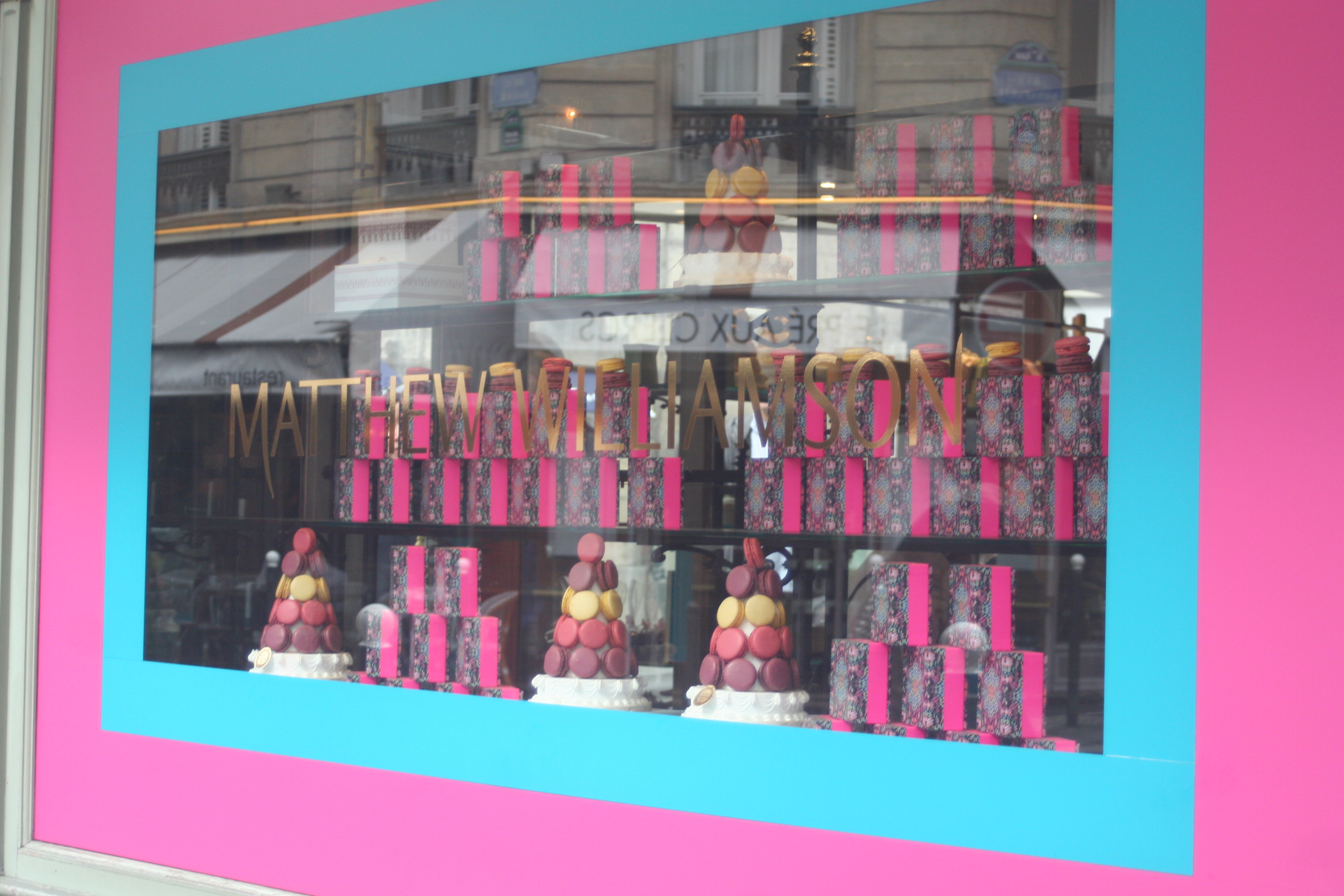
Walking around Paris you cannot avoid stumbling upon all sorts of wonderful things almost constantly. The best of my visit included a whole pink-and-blue window dedicated to Matthew Williamson’s chocolate, a Russian tea chain shop called Kusmi, a gorgeous Isabel Marant window, the biggest Zadig et Voltaire store ever seen by human eyes and a very elegant tea and candle company called Mariage Frère – Comptoir deThé (the Darjeeling candle is on my Christmas wishlist).

One of the highlights of my trips, however, was a unique and beautiful jewellery shop, which I reached at the end of a long walk from La Frégate, a great upmarket-yet-affordable restaurant on the Rive Gauche, where I had a mouth-watering confit de canard with garlic roasted potatoes…

Going back to the jewellery shop (!), this little boutique is called BRAI exclusive and takes its name from the homonymous jewellery collection created by two of the most inventive jewellery designers I’ve met in a long time. Delphine Pariente started off her career designing bags in 1998 moving to jewellery pretty soon after and hasn’t stopped creating one-of-a-kind pieces of art since. Her co-designer Claire Naa is also extremely creative and is the creator of the origami jewellery. I bought two pink gold little pendants, but it was very hard to choose.


Unhappy with the huge (but seemingly not sufficient) amount of cash I had spent until that point, I went vintage shopping. I was lucky there. Shall we talk about how cheap quality vintage is in Paris? I headed to the hip area Le Marais and visited Fripes Star, Free ‘P’ Star (my favourite) and Le Verger du Prince among others. I bought a lovely blue polka dot 1940s dress, a skirt, two pairs of shoes, a jumper and a hat, all way under £20 each.

Oh Paris, I want to come and see you again!

The Best Shop in Lisbon

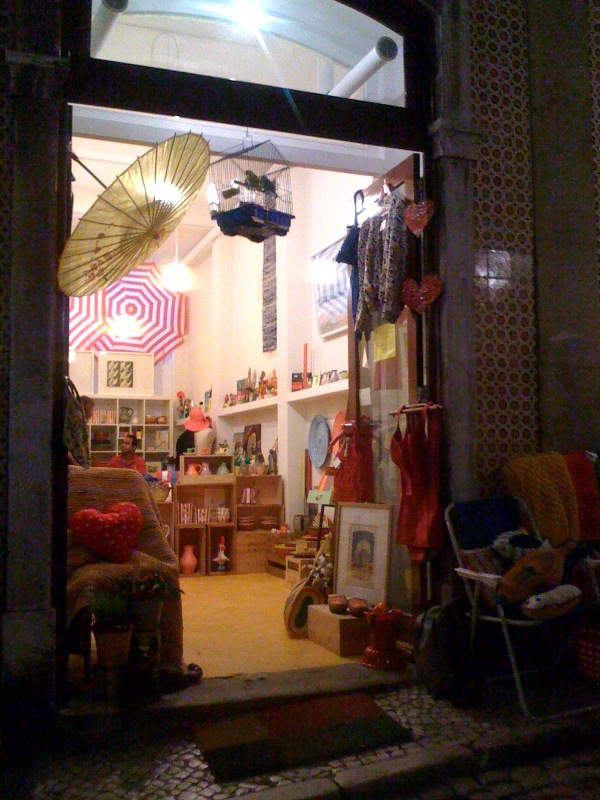
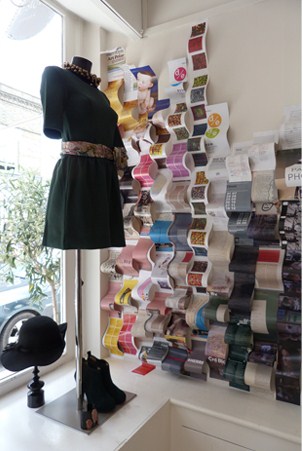
In the centre of Mouraria, a small up-and-coming area behind Alfama, sits A Loja, an incredibly inspiring vintage shop. The owner is a very sweet young French lady who loves all things original and vintage.

First of all, I have to apologise for the quality of pictures. When I first found this gem of a shop, it was night time and a brilliant little street party was in full swing. A few people were jamming in the tiny square adjacent to it and the restaurant right on the square was selling drinks (double shots, a large wine and everything in between) €1 per glass. I stopped by, drank, danced, made friends, bought a lovely little book from A Loja and took a few pictures of the shop with my mobile phone. A couple of days later, before my return to the UK, I decided to take more pictures, this time with a film camera, in the daylight. Unfortunately the daytime pictures didn’t work out as the camera went crazy and I had to resort to my first batch of mobile photos!

A Loja is full of vintage clothes, books (the one I bought was a very affordable 1969 copy of Sociologie de la Mode, by René König), small furniture such as chairs and shelves, cushions, vinyls, bowls and all sorts of charming knickknacks. A cage was hanging above the door with two colourful birds in it and more often than not you’ll hear crackling 1950s music playing which will definitely get you in the vintage mood.

If you happen to stop by in Lisbon, this is a wonderful little shop that has to be visited! You will not be disappointed.

A Loja, Largo dos Trigueiros, 16B, Lisbon.

A/W ’11 Trends – She’s a Femme Fatale

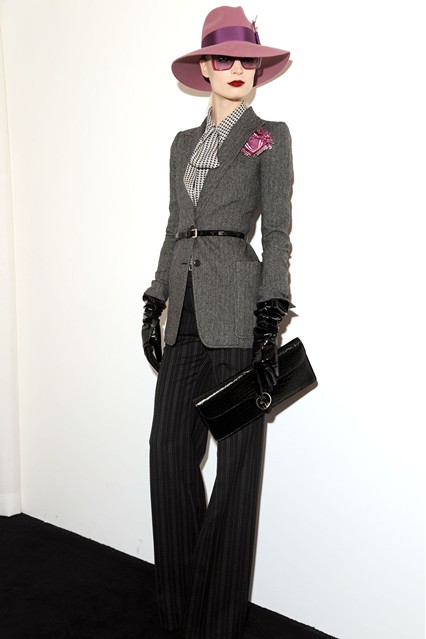
This year has seen a rebirth of the Femme Fatale and a sudden rise in the 1940s’ trend. Vamping it up and adding va-va-voom are de rigueur to stand out in the approaching winter months.

(Picture source: www.vogue.co.uk)

Midi skirts, pretty pussy-bow blouses, cinched-in waists, tailored jackets, hyper-feminine tea dresses, full red lips and flirty hats all appear in the must-have list if you want to follow this lady-like trend.

(Picture source: http://www.marieclaire.com)

Of course this trend spans over 10 years of fashion history, and, as such, it has different influences, particularly originated from the circumstances due to World War II. At the beginning of the decade, with most countries being crippled by the poverty dictated by the international conflict, the hems went up to use less fabric and the shapes became more relaxed as women needed looser, more comfortable clothing in order to move and work. But by the end of the decade, women were tired of the figurative and practical cuts caused by warfare, and in 1947 Christian Dior introduced his New Look Collection (term coined by the American fashion-magazine editor Carmel Snow), which featured extra full skirts, tiny wasp waists and sloping shoulders, in contrast to the squared, military shoulders that were in use at the beginning of the decade. The skirt became longer in contrast to the early ‘40s (twelve inches or less from the ground), sustained by a taffeta petticoat.

(Picture source: http://www.vintageconnection.net/NewLook.htm)

Current designers have put together both sides of the ‘40s and adopted the full skirt as long as the slim-fit one. Built-in support is key to this style, a feature that is still present two decades later, as showcased in Mad Men. This winter, colours are going back to the Forties too, seeing deep burgundy, bottle green, mustard and rich browns on the main palette. At the same time, also other, more daring shades are introduced, such as shocking pink, bright red and lilac, to modernise this vintage look.

(Picture source: http://www.marieclaire.com)

An endless list of designers, including Frida Giannini at Gucci, Miuccia Prada, Jean Paul Gaultier and Donna Karan have dipped into Forties glamour, adding furs, pearls, gloves and shrugs as final touches and, of course, including both styles of midi skirts. This trend is wonderful for complimenting womanly figures and creating curves, and is very flattering on pretty much all shapes and forms. Wear it with chunky, platform Mary Janes, leather inserts in skirts and blouses and long hair falling on your shoulders to keep it fresh and updated.

(Picture source: http://www.myfashionlife.com)

Interview with Wild Swans Boutique’s Owner Caroline Van Luthje

Wild Swans is not your usual boutique. It has a predominantly Scandinavian theme, for one; its three locations don’t even go near the usual Covent Garden/Marylebone/King’s Road indie-shop hotspots; and finally, its owner and creator Caroline Van Luthje opened it after a long career in . . . TV production. She started with her first shop in Chiswick in 2005 and it went so well that last year she opened the Islington branch. This year it’s the turn of the Mill Hill store, all three areas with that quintessential village feeling that Caroline was mainly keen on. So how has Wild Swans come to be one of the most remarkable names in the field in only four years? I recently met Caroline to find out more about what her business is all about.

MC: How did you decide to move to London and open a boutique from originally being in TV production?

CVL: When I first moved to the UK, my initial goal wasn’t to open a shop. But then I realised that, even after moving here, I was still going back home to buy my clothes, because most of the designers I liked were simply not available inLondon. So at that point I decided that I was ready to try something different and, despite not having any retail background, I went for it. Retail is the third biggest export inDenmark, so outsourcing material from there wasn’t actually unusual.

MC: How do you choose the designers and pieces that you showcase? And how do you find new and upcoming designers?

CVL: I tend to go toDenmark on a regular basis with another member of my team to attend retailers’ fairs and fashion shows and meet suppliers, and we usually choose different pieces from there that go together and adhere to the classic yet edgy style of our shop. When selecting new and upcoming designers instead, we trust the word-of-mouth method within the industry or we read specialised magazines.

MC: You say that the great majority of the products in store are Danish or at least Scandinavian, except for a couple of names like Jaime Mascaro and American Vintage. How come did you decide to make an exception for them?

CVL: We always aim to give a style that is complete – we like our clients to get into our shops and find different pieces that would work together harmoniously into a full outfit. So for example Jaime Mascaro’s shoes are so comfortable and they offer a great choice of ballerinas and evening shoes, therefore we decided to keep that name in store. With American Vintage, instead, we really like their recent collections and found that as a brand it was quite difficult to find, so we decided to have it just to cover that gap in the market.

Photo source: http://www.wild-swans.com/

MC: How has the trend of your shops and the clientele changed through the years?

CVL: The trend of the shop (and its clientele) has always been mixed, really. Our customers’ age spans from 25 to 70 years old and so we have always tried to meet their needs depending on their profile and background. For example, in the new store we opened in Mill Hill, which is in the middle of a great Jewish community, we have noticed a need for dresses and skirts with a slightly stretched length that can cover the knee for attending the Synagogue. That comes as a new challenge to us and we are currently seeing different designers to see whether they would be happy to adapt the design of a few of their dresses for that.

MC: How would you say the credit crunch has affected the way your clients shop? Would you say it increased the need for “slow fashion”?

CVL: I felt that people in general were a little frightened at the beginning and because of the downturn we were mostly in danger as retailers, being in the “middle market” bracket. But slow fashion is actually taking over more and more and so are dedicated and independent boutiques that offer good quality and unique clothes, therefore so far we’ve been doing quite well, in fact.

MC: What is the future of independent shops, in your view?

CVL: Independent shops are just going to get stronger and stronger. There is a big demand for an independent boutique style, and all we need to do is to create a niche and have something different to offer. Since we started off in 2005 we’ve always been trying to tweak what we offer to improve it and give our clientele what they are after. From seasonal clients’ evenings with designers to the occasional free manicure service in store, you always need to give that little bit more to be a bit different.

MC: I heard that you have been shortlisted for the Drapers Award this year!

CVL: Yes, they called in the shop and announced that we were shortlisted. 50 shops were initially nominated and now there are only 9 of us left now. We’ll find out if we’ve won on the 18 November!

MC: What is the fashion scene like in Scandinavia?

CVL: It is much easier to spot trends up there. For example you walk into a café and see straight away a bunch of girls wearing the same trend, similar clothes etc, and you get that less often inLondon. The general styles are not too far from those here in theUK, but at times a few trends arrive there first and then take up here as well, such as harem trousers and playsuits.

For more info about this amazing shop please visit http://www.wild-swans.com/default.

S/S ’09 Colour Trends – Finding a Balance

It was always a bit like keeping dry hay away from fire, or raw chicken away from finger food. We spent decades looking away in horror and pulling faces at the sight of the two styles matched, as if we knew best (and indeed, we thought we did). But this year a revolution is happening – a revolution that is changing the concept of colour. The nude shades are back, but this time they are matched with fluorescent colours. Yes, we can!

Out goes the black, that was always considered lime yellow and shock pink’s best friend, in come the beige, dust pink, khaki, delicate lilac, pale ecru and any other soft shade in the natural palette. No more white and shocking pink, way too safe for us 2009ers.

This new trend is intended to highlight the juxtaposition between sharp colourful florals and soft natural shades. And surprisingly enough, it works. Neon colours and natural shades really are a match made in Heaven.

In fact, this trend has been showcased for quite a while now, going through ’07 Versace clingy yellow dresses with a grey lining, or ’08 Dries Van Noten soft peach parkas and bright pink sweaters on the men’s catwalk shows. No one has been brave enough to sport such an idea in the ‘real world’ so far. But finally, here we go. Gucci has presented its latest collection with beige and bright pink and yellow traveller’s bags, and khaki jackets with superimposed bright yellow and orange flowers; suddenly everyone is wearing brights and pales like there’s no tomorrow.

You can find it on TV, in various advertisements on the back of magazines, and absolutely everywhere in the shop windows on the high street, starting from Topshop, all the way down to H&M passing through GAP and the ever-growing, ever developing Uniqlo. Even Susie has showed herself on her Stylebubble blog in different outfits showcasing the eye-catching mismatching.

[Gucci_SS2009-7.jpg]

There may be several reasons why this trend has occurred. Most likely, the high fashion stylists and designers saw a need to mix the still strong influences of the ‘80s with one of the biggest staples of the upcoming ‘90s style revival. Hence the fluoro colours have become matched with nude tones and earthy, natural, soft shades.

Another reason why this could have happened is because we saw the exponential growth of the “charity shop” style, where everything is mixed and matched together in a seemingly careless manner, placing different fashion decades together in the same outfit, and therefore again obtaining the same ‘80s and ‘90s look, so the high end of the market has once again had to follow what the new trendy masses are wearing just to keep apace.

In a word, we could describe this trend as finding a balance, and this is why it looks so alluring. It is the freshness of it that attracts us, especially with the new sunny season beckoning from not so afar. We have seen more than enough English-liquorice outfits out there, and on the other hand we have now come across one too many different-shades-of-mushroom getup. Fluorescent colours and natural shades create an unexpected ensemble which delights the tired eye.

The final question is: will this trend last? We don’t know, and of course we can’t tell. But what I can state for sure is that, like everything else in fashion, it is bound to come back!

Paul Smith Creates a Limited Edition Bottle Design for Evian

The marketing news website http://www.marketingmagazine.co.uk/ reported on 5 October 2009 that quirky British designer Sir Paul Smith has created this year’s Christmas limited edition water bottle for Evian.

The French mineral water company started this new tradition in 2008, when it partnered with Christian Lacroix to obtain their first limited edition bottle design. The 2009 version of the bottle was designed by Jean Paul Gautier and this year Sir Paul Smith has been working on the 2010 project.

The renowned Brit fashion icon has created a festive-themed, whimsical-designed bottle featuring his signature stripes in vibrant colours wrapped around its neck and five different caps to collect.

As reported by the website www.luxist.com, this latest creation is also designed to echo Evian’s latest youth-oriented advertisement campaign. In the promotional video, made during the promotional photo shoot that was based in his studio, Smith said: “My whole life is about being childlike […], which means that you have a lateral mind and you’re very curious […]. That’s why this room is just full of toys, beautiful books, strange objects, good fun things [from which] you can get great inspiration. Life is about living young, being youthful and enjoying yourself everyday”. The whole video is available on http://www.youtube.com/watch?v=UzPyXPzy6ZY.

Picture source: http://www.daaamn.com/window-shopping/paul-smith-pour-evian

The bottles are currently only available for pre-ordering on www.ShopEvian.com, and will be sent out from 31 October 2009. However, they should make their way to fine dining establishments and gourmet retailers nationwide around the beginning of November. This partnership will be supported by advertising as well as PR as part of the £7m brand marketing investment for 2009.

This initiative, however, was bound to be controversial and, as predicted, it received both good and bad responses. Delphine Hirasuna published on www.atissuejournal.com “These days selling bottled water has become harder with countless brands vying for market share and sustainability proponents urging people to drink water filtered from the tap, even adding the bubbly themselves. With its designer bottles, Evian, owned by Danone Waters of America, isn’t touting how its product tastes, but how its bottles look. At US $13.95 for a single 750ml bottle and US $118 for a 12-bottle case, what consumers are buying is imaginative packaging that happens to have water inside”.

Others have commented that fashion designers are firstly artists, and that art and creativity should not be sold to a money-making multinational company like Evian.

One of the comments about this news on the Marketing Magazine website was “I thought designers were all going ‘green’ these days. This is a mistake in my book, particularly with the possible move towards 20p/500 ml on street taps in the pipeline”.

Coincidentally, other drink producers have recently embraced this trend too, such as Coca Cola with its collaboration with Nathalie Rykiel, Chivas Regal whiskey with Alexander McQueen and 1800 Tequila with its competition for new up-and-coming artists.

Paul Smith opened his first shop in London in 1987 and has been creating quirky yet classic (and therefore commercially popular) pieces ever since, his main collection being menswear. Smith was knighted by Queen Elizabeth II in 2000 after nearly three decades as a menswear icon. Since May 2008 Paul Smith has been writing a fashion blog for http://www.vogue.co.uk (http://www.vogue.co.uk/blogs/fashion-designers/paul-smith/090929-paul-smith-campaign-and-london-fash.aspx).